How we test camera straps
1. The shape of the band
A flat woven band presents a wide surface to your neck and shoulder and spreads the weight of the body across it. A round cord presents almost none, and puts the same weight into a narrow line. For a light mirrorless body worn for an hour, you will not notice the difference. For a heavier body worn all day, the flat band is the one you will still be wearing in the evening.
The Camstrand cotton and leather range is a wide woven cotton tweed band in a chevron weave. The braided rope range is a round braided nylon cord, lighter off the camera and quieter under a jacket collar.
2. The hardware where the load passes
A strap rarely fails in the middle. It fails at the ends, where the load passes into the camera. Plastic clips at camera scale flex under load and eventually split, usually without warning. Metal and leather at those points are what let a strap survive years in a bag.
The cotton range carries leather end pieces and leather locking tabs, closed with a press stud. The rope range carries metal ends and a metal buckle head.
3. A load figure
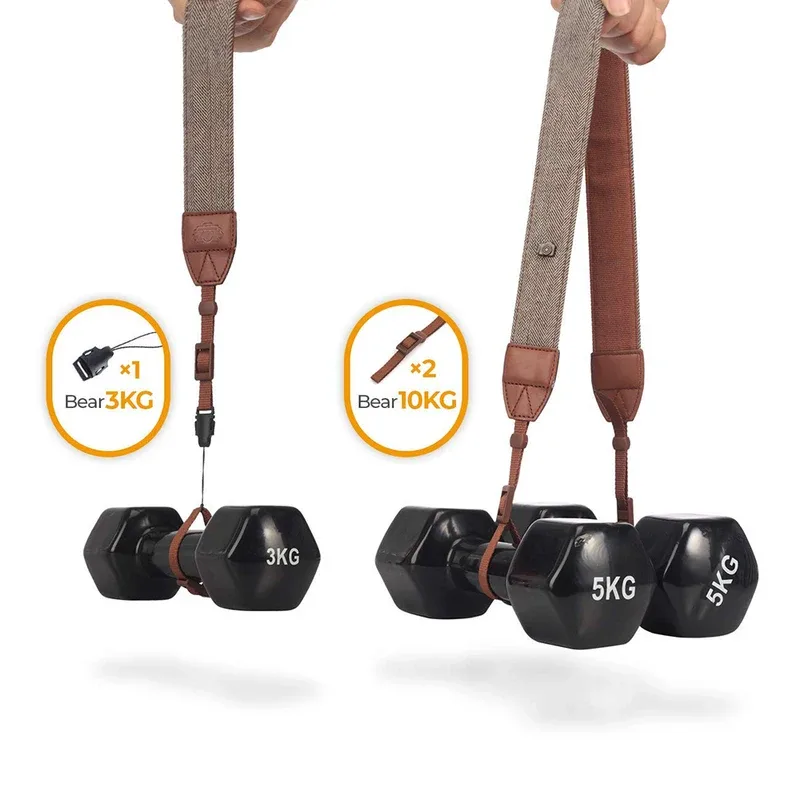
The cotton and leather range has a photographed load test: 6.6 lb (3 kg) hanging from a single attachment cord, and 22 lb (10 kg) with both leather tabs closed. The gap between the two is the reason to always use both tabs. Those two figures belong to the cotton range alone; the braided rope range has no load figure. Neither range is sold as a climbing or safety product.
4. How it meets your camera
A strap that will not fit your lugs is worthless whatever it holds. Both Camstrand ranges attach through the standard eyelets on the top corners of a camera body, DSLR and mirrorless alike, and they are listed as compatible with Sony, Nikon, Canon and Fujifilm bodies. Lug slots differ in width between bodies, so check yours in the compatibility guide before you order.
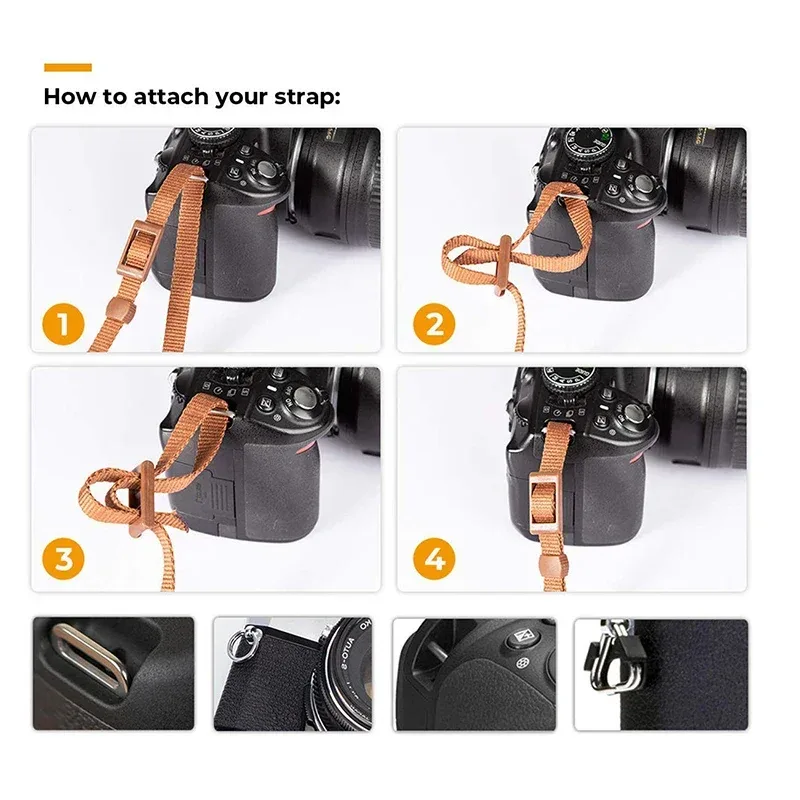
The cotton range fits in four steps: a thin cord passes up through the eyelet, loops back, pulls tight, and a flat tab locks down over the knot. The rope range ships with a mounting kit of two looped cords, two flat perforated tabs and three split metal rings, which gives it a way onto a flat eyelet, a fitted triangular ring or a leather half-case. The step-by-step version is in our guide to attaching a camera strap.
5. How it comes off
A strap that is annoying to remove stays on the camera permanently: it dangles into the frame on a tripod and wraps around the lens in a bag. The rope range clips onto split rings that stay on the camera, so the cord comes off in a second with nothing to unthread. The cotton range stays threaded through the lugs; taking it off means undoing the cords and the tabs, and in exchange there are fewer parts to check. The quick-release guide sets out what each approach costs.
6. The finish
The strap is the one part of your camera that other people see all day. The cotton range comes in Charcoal, a dark gray herringbone with black leather, and Camel, a beige tweed with tan leather. The rope range comes in eight solid colors and seven two-tone marls, braided from two tones so the cord reads as flecked rather than flat.
The two ranges, criterion by criterion
| Criterion | Cotton and leather | Braided rope |
|---|---|---|
| Band shape | Wide, flat woven cotton band that spreads the load | Round braided nylon cord, load on a narrow strip |
| Hardware at the load points | Leather end pieces, leather tabs, press stud | Metal ends and a metal buckle head |
| Load figure | 6.6 lb (3 kg) on one attachment cord, 22 lb (10 kg) on both leather tabs | No load figure |
| Fit to your lugs | Thin cord through the eyelet, locked under a flat tab | Split rings plus a quick-release fitting, mounting kit in the box |
| Taking it off the body | Undo the cords and the tabs | Unclip, the rings stay on the camera |
| Finish | 2 models: Charcoal, Camel | 15 models: 8 solid colors, 7 two-tone marls |
What this changes for you
Every order is covered by a 30-day money-back guarantee, under the refund policy, shipping is free, and delivery takes 6-10 business days, as set out in the shipping policy. Who writes this site is on the about page, questions before ordering go to the contact page, and the seventeen models sit together on the home page. If you already know how you carry, go straight to the neck strap, the shoulder strap or the rope strap page.