Camera strap compatibility, explained by the lug
Updated on
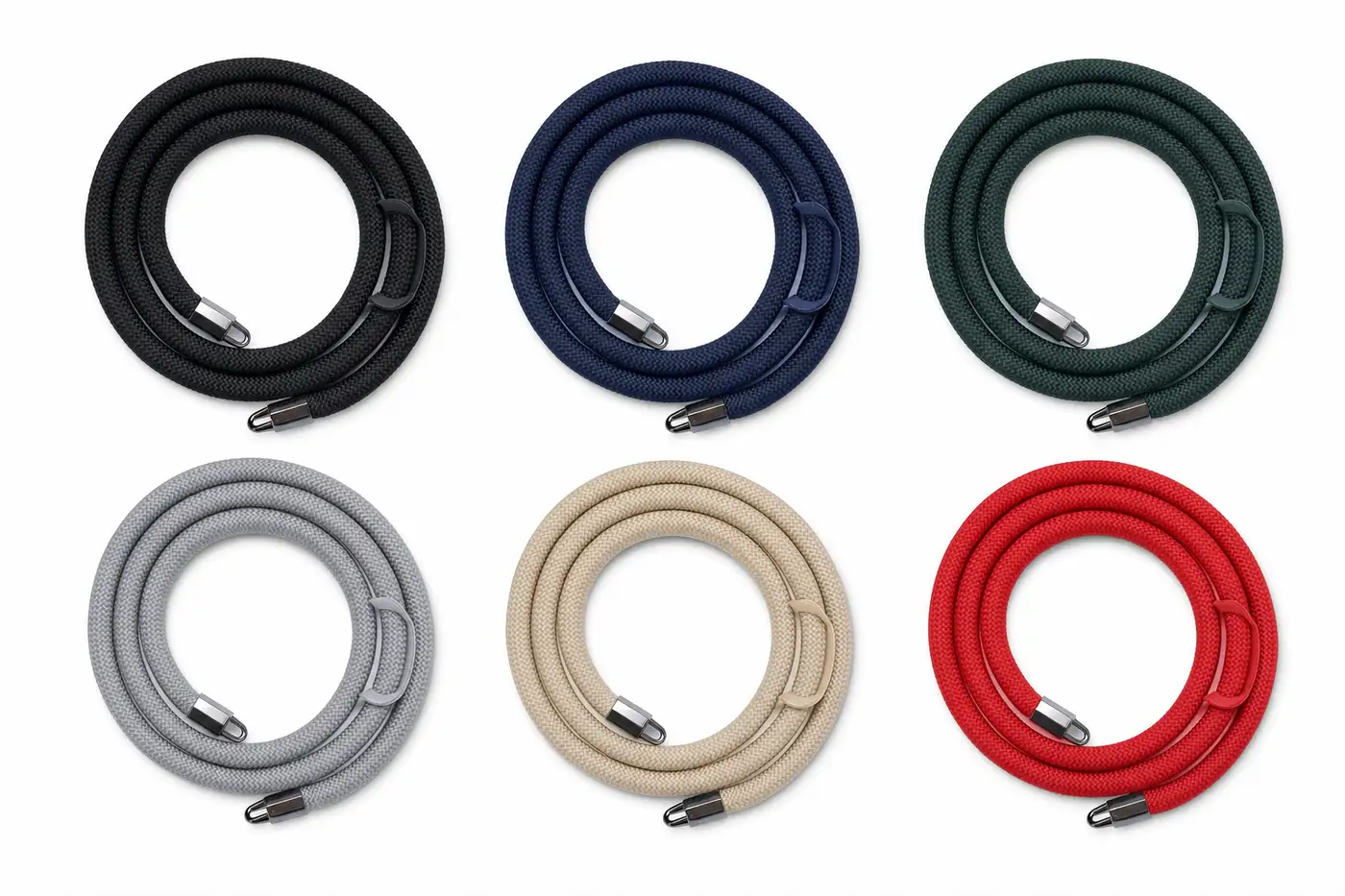
Search for a strap and the results will sort themselves by camera brand. That is a search habit, not an engineering fact. Nobody at any camera company designs a proprietary strap interface, and no strap maker gets a certificate from them either. What actually decides whether a strap fits is a small piece of metal on the top corner of your body, and there are only three shapes of it worth knowing.
I own bodies from three of the four names people search for, and I have fitted the same strap to all of them. Where I have had trouble, it has never been the badge on the front. It has been a narrow slot on a compact body, a lug positioned so close to a thumb rest that a wide band folds, or a plastic protector that nobody wants to take off. This guide is about reading your own camera instead of reading a compatibility chart.
Where we stand. Camstrand has no relationship, partnership or approval from any camera manufacturer. Brand names appear on this page only to describe the strap hardware on their bodies. The one measurement that decides everything is your own lug shape, and it takes a minute to check.
The three lug types
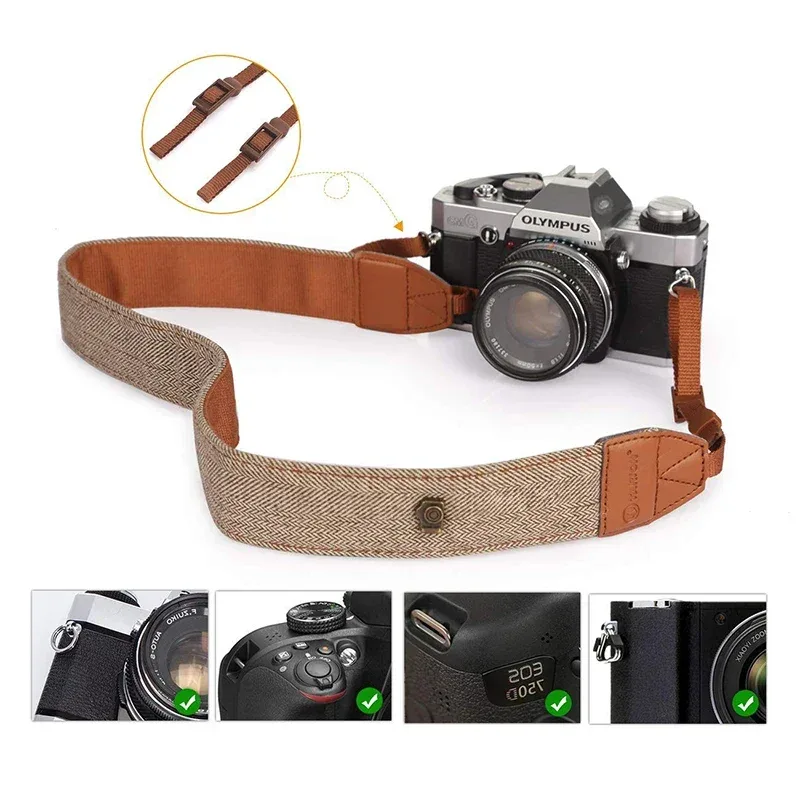
The triangular ring is the friendliest of the three. It swings, so a strap can hang at any angle without twisting, and its opening is generous enough for a wide woven band. Most rings arrive with a small plastic or leather protector that stops the metal from scratching the body. Keep it. It costs nothing and it saves the paint.
The flat eyelet is a fixed rectangular hole. It does not swing, so the strap has to do the bending. Some are lined with metal and some are moulded straight into the shell. Width is the thing to look at, because that is what a wide band has to pass through.
The narrow slot is the flat eyelet shrunk down for a small body. It is the reason cord based straps exist at all. A thin looped cord goes through anything that a keyring goes through, so the question of band width simply stops mattering.
interchangeable lens cameras shipped in 2025 were mirrorless, roughly nine in ten
— CIPA shipment data, via DPReview, 2026
That shift is the reason this question comes up so often now. The bodies people are buying are mirrorless, and mirrorless bodies are where flat eyelets and narrow slots live.
What tends to sit on which body
The table below is a description of what I have handled, not a manufacturer specification. Bodies change between generations, and two cameras in the same line can differ. Treat it as a starting point and then look at your own camera.
| Body type | Usual lug | Wide cotton band | Thin rope cord |
|---|---|---|---|
| DSLR, larger bodies | Triangular ring | Fits | Fits |
| Full frame mirrorless | Ring or flat eyelet | Usually fits | Fits |
| Compact mirrorless, APS-C | Flat eyelet | Check the width | Fits |
| Rangefinder style, premium compact | Narrow slot | Often will not pass | Fits |
APS-C and Micro Four Thirds bodies shipped in 2025 against full frame and larger
Smaller sensors mean smaller bodies, and smaller bodies mean tighter lugs. The majority of cameras leaving factories are in the size class where a cord is the safer bet. That is not a sales pitch. It is just what the shipment numbers describe.
Why a thin cord fits where a band will not
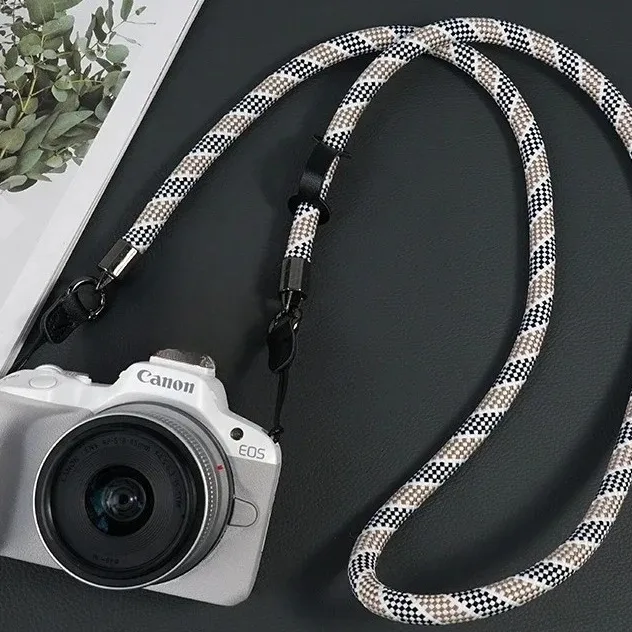
This is the whole design argument for the rope format. It decouples the size of the strap from the size of the hole. Our braided rope strap ships with two looped cords, two flat perforated tabs and three split metal rings, so a body with narrow slots is a five minute job rather than an impossible one.
There is a second benefit that people discover later. Because the cord stays on the camera and the strap clips to it, you can take the strap off without undoing anything. That matters on a tripod, and it is covered properly in our quick release guide.
The wide band is not obsolete. On a body with triangular rings it spreads load across a broad surface and it looks like nothing else. Our cotton and leather strap exists for exactly that case, and its load test gives it a hold of 6.6 lb (3 kg) on a single attachment cord and 22 lb (10 kg) using both leather tabs. Those two figures apply to the cotton range only.
Checking your own camera in a minute
The second thing to check is clearance. Some bodies place the lug directly under a thumb rest or beside a grip, so a wide band folds hard against your hand every time you shoot. A cord hangs clear of that. If your thumb has ever fought the strap, that is what was happening.
consecutive years Canon has reported the top share of the interchangeable lens camera market
One brand dominating the shelves does not mean one lug shape dominates the shelves. Within any single maker's range you will find rings on the larger bodies and flat eyelets on the smaller ones, which is exactly why sorting straps by brand tells you so little.
From our own feedback files. Across the 119 written buyer reviews (July 2026), 7 buyers made a point of saying the strap matched the description they were given, and 10 mentioned fitting or adjusting it. No buyer reported that the strap would not attach to their camera.
Short answers
Will a Camstrand strap fit my Canon, Nikon, Sony or Fujifilm body?
Do I need an adapter for a camera with flat eyelets?
Can I keep the original ring protectors on the camera?
Once the fit question is settled, the next one is usually how you want to carry the camera. The neck, wrist and harness comparison answers that without pretending we sell all three. For step by step fitting, read how to attach a camera strap, and for choosing between materials see how to pick a strap.
Carry position pages: neck strap and shoulder and crossbody strap. Buyer feedback is on the reviews page, and the rest of the guides sit on the blog index. The full range is on the home page, and the team is described on the about page.