How a quick release camera strap works
Updated on
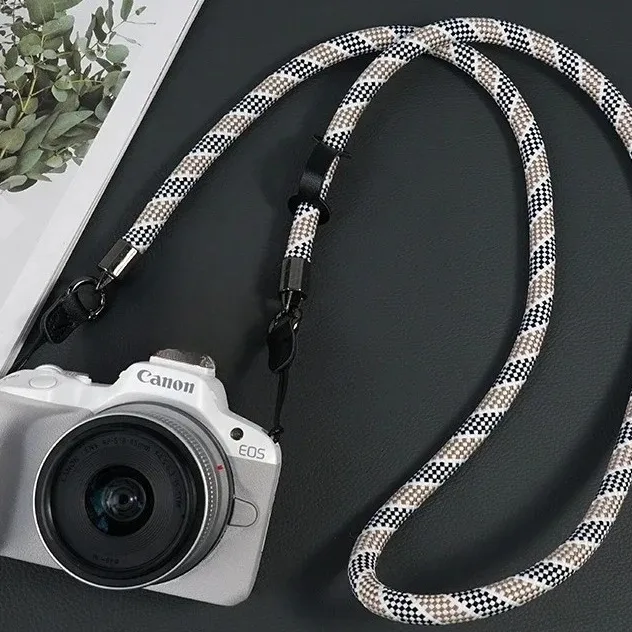
The first time I watched someone take a strap off a camera in one second, I assumed there was a clever buckle involved. There was not. There was a short cord tied to the body, a metal ring, and a loop on the end of the strap. The cleverness is in what the design leaves out rather than what it adds.
Quick release is one of those phrases that has been stretched to cover several different mechanisms, and the differences matter when you are deciding what to buy. This page explains the ring and cord version, which is what our rope range uses, then covers why anyone bothers detaching a strap at all and where the system needs your attention.
How the ring system works
Three parts, and the important one is the cord. Because it never comes off, the camera is always ready to accept a strap again. You are not retying anything, you are not fishing a band through a lug, and there is no plastic keeper to lose on a hotel carpet.
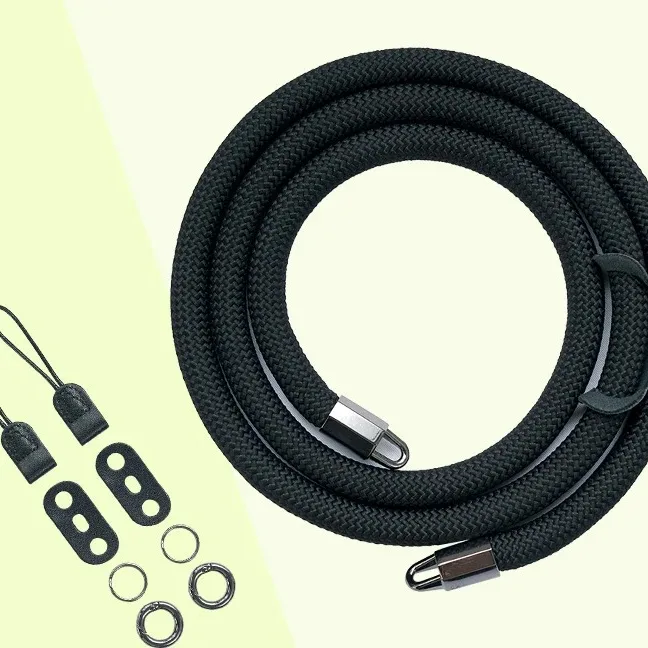
Our braided rope strap ships with everything needed for this: two looped cords, two flat perforated tabs for bodies where the cord alone sits awkwardly, and three split metal rings. Fitting is covered step by step in how to attach a camera strap.
the tripod thread specified by ISO 1222, first issued in 1973 and still the connection every plate uses
That standard is why a tripod plate from one maker screws into a body from another. It is also the reason so many quick release systems anchor underneath the camera instead of at the lugs, and why those systems and your strap end up competing for the same piece of real estate.
Why anyone detaches a strap
The tripod case is the one that converts people. A strap acts like a sail. On a long exposure in any kind of breeze, that movement travels up the legs and into the frame, and no amount of mirror lock up fixes it. The usual workaround is to wrap the strap around the tripod head, which half works. Taking it off entirely works completely.
The bag case is quieter but adds up. A camera with a strap attached does not sit flat in a divider, and the loose end finds every buckle in the bag. Pulling the strap off before packing takes a second and saves a small argument every time you open the lid.
The third case is the one I use most. I shoot two bodies, and I have a strap I actually like. Moving it between them at the ring takes less time than deciding which body deserves it. That habit is the practical version of the point made in our carry comparison.
items of used camera and video kit recirculated by one specialist in a single financial year
Bodies change hands constantly now. A strap that unclips is a strap that survives the body it was bought for, which is a better argument for the format than anything about speed.
The split ring is the part to watch
Walk the ring all the way around until the tail passes the gap completely. Then rotate the ring so the join faces you and look at it from the side. If you can see a step where the two ends meet, the loop or the strap is sitting in the gap and the ring is not closed.
The second check is wear. Rings are metal and cords are not, so over a long life the cord is what gives first. Look at the cord where it passes through the ring every few months. If it is flattened or fuzzing, replace it. The kit ships with spares for exactly that reason.
The third check is the one people forget: do not carry a camera on the ring alone with the strap half attached. When the strap is off, it is off. Set the camera down or hold it. A ring hanging from a cord is not a handle.
Ring, clip and buckle systems compared
| System | Detaches from body | Speed | Main trade off |
|---|---|---|---|
| Cord and split ring | Yes, at the ring | About a second | The ring must be fully closed |
| Proprietary clip anchors | Yes, at the anchor | Instant | Spares only from one maker |
| Tripod socket plate | Yes, under the body | Fast | Occupies the tripod thread |
| Wide band with tabs | No, it stays threaded | Not applicable | Simplest and strongest per part |
governs the Arca style plate profile, unlike the ISO tripod thread it screws into
— Photography Life, Arca-Swiss quick release system explained, 2025
This is the trap under the camera rather than at the lugs. The thread is standardized and the plate profile is not, so two Arca style parts can refuse to fit each other. The lug side of the camera has no such problem, because a cord and a ring have nothing to be incompatible about.
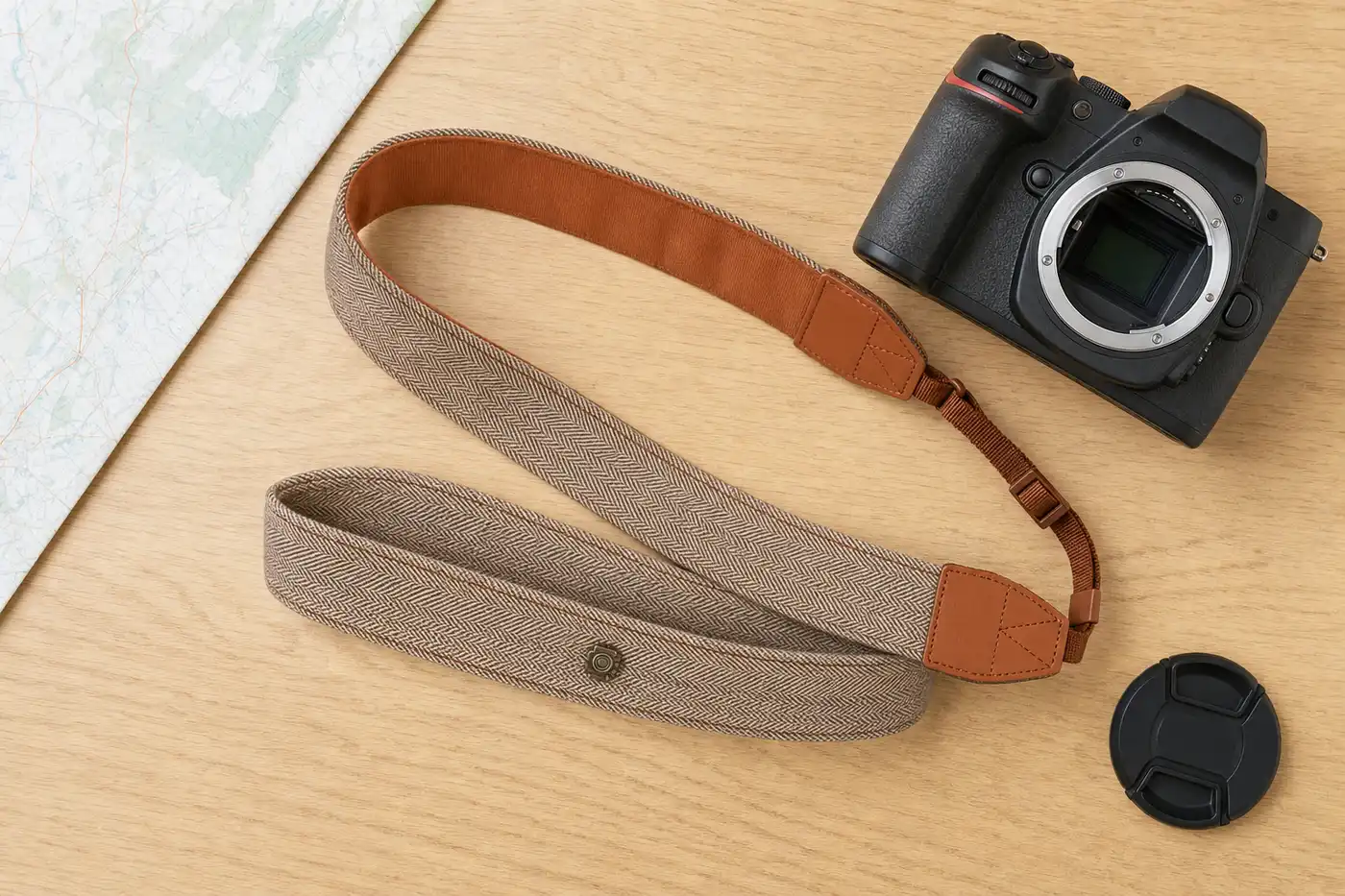
If you never use a tripod and never swap bodies, the wide band is the calmer choice. Our cotton and leather strap stays threaded through the lugs, has fewer parts to check, and in its load test holds 6.6 lb (3 kg) on a single attachment cord and 22 lb (10 kg) using both leather tabs. Which lugs you have is covered in the compatibility guide.
From the feedback files. Across the 119 written buyer reviews (July 2026), 67 buyers mentioned build quality or sturdiness and 10 mentioned fitting or adjusting the strap. Hardware is what people notice, which is consistent with a system whose only real risk is a ring left half closed.
Short answers
Does the cord stay on the camera when the strap is off?
Will a quick release strap mark the camera body?
Is a ring system strong enough for a heavy setup?
For the fitting sequence, read how to attach a camera strap. For choosing between the two ranges, read how to pick a camera strap. Carry position pages: neck strap and shoulder and crossbody strap.
The full range is on the home page, buyer feedback is on the reviews page, more guides sit on the blog index, and the team is on the about page.